

NOW HEAR THIS Nigerians all over the world especially Igbo, per chance you may Reflect and know that Nigeria will definitely remain One Nigeria due to inter-marriages between the various tribes in Nigeria and all over the world.

Hajiya Ajoke Murtala Mohammed, 1975: The Quiet First Lady Beside Nigeria’s Most Charismatic Soldier
A graceful portrait of the woman who stood beside General Murtala Mohammed during one of Nigeria’s shortest but most unforgettable regimes
In the dramatic political theatre of Nigeria’s military era, General Murtala Ramat Mohammed was the loud, fearless, and electrifying face of change.
But standing quietly behind that whirlwind of national transformation was a woman Nigerians saw less often yet remembered with deep respect—Hajiya Ajoke Mohammed.
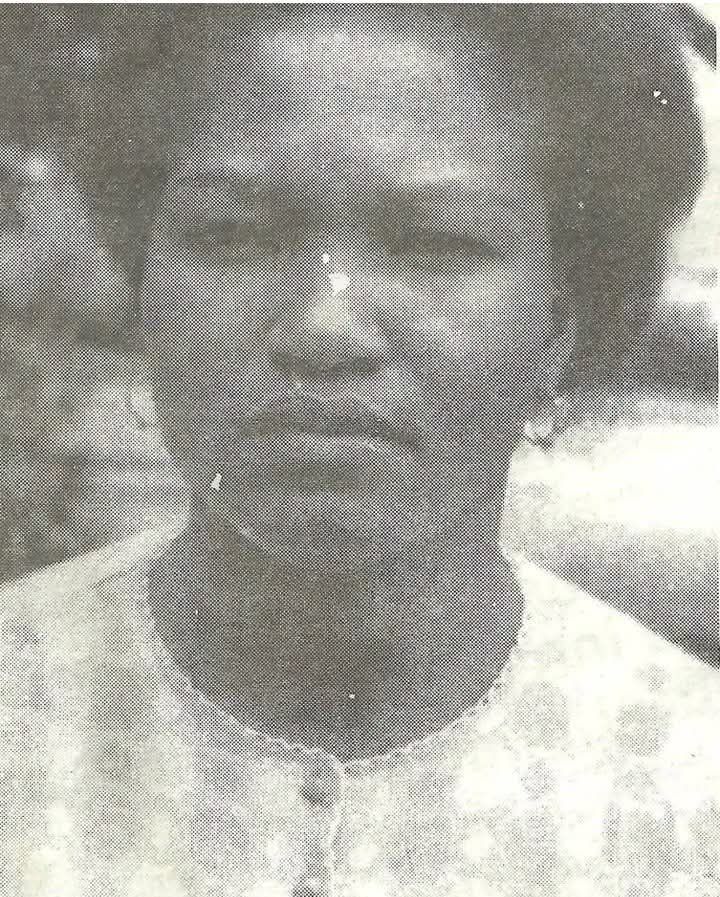
This 1975 photograph, taken during the brief reign of her husband as Nigeria’s Head of State, captures Ajoke Mohammed in the role she came to occupy with unusual dignity: that of a restrained, elegant, and deeply private First Lady during one of the most intense political transitions in Nigerian history.
While Murtala Mohammed’s government lasted barely 200 days, his family—especially his wife—became part of the public imagination in ways that endured long after his assassination.
Who Was Hajiya Ajoke Mohammed?
Hajiya Ajoke Mohammed, often formally referred to as Hafsat Ajoke Muhammed, was the only wife of General Murtala Mohammed.
She was of Yoruba background and met Murtala in the early 1960s while he was a young officer in the Nigerian Army. Their marriage in 1963 symbolised, in many ways, the inter-ethnic character that would later define Murtala’s national outlook—a northerner from Kano marrying a southern Yoruba woman at a time when regional identities were highly politicised.
Unlike many wives of military rulers who later embraced overt public glamour, Ajoke Mohammed remained remarkably modest and low-profile.
She was known for:
quiet composure,
conservative dress,
deep family devotion,
and a visible reluctance toward excessive public exposure.
This restraint mirrored the “low profile” public philosophy her husband famously preached to government officials after taking power in July 1975.
1975: Becoming Nigeria’s First Lady Overnight
On 29 July 1975, General Murtala Mohammed emerged as Nigeria’s new Head of State after the bloodless coup that removed General Yakubu Gowon.
Overnight, Ajoke Mohammed moved from being a military officer’s wife into the highly scrutinised role of the nation’s First Lady.
Yet this was not the modern First Ladyship Nigerians would later become familiar with.
There was:
no elaborate media machinery,
no pet projects publicised daily,
no socialite celebrity culture.
Military spouses in that era were expected to maintain symbolic dignity rather than political visibility.
Thus Hajiya Ajoke Mohammed’s public appearances were usually confined to:
state receptions,
diplomatic ceremonies,
military social functions,
charity visits,
and official photographs such as this one.
Her image projected discipline, calmness, and a kind of aristocratic reserve.
The Woman Behind a Restless Revolutionary
General Murtala Mohammed’s government was one of speed, urgency, and confrontation.
In just six months he:
purged thousands of civil servants,
announced the move of the capital from Lagos to Abuja,
reorganised the federation with new states,
intensified anti-corruption rhetoric,
and launched one of Nigeria’s boldest foreign policies on African liberation.
That kind of leadership generated enormous pressure—and danger.
Ajoke Mohammed later became known among family associates as the woman who constantly feared for her husband’s safety because she understood how many enemies his blunt style was creating within the military and political establishment.
Her fears would prove tragically justified.
A Marriage Marked by Simplicity
Accounts from family records and biographical sketches repeatedly describe the Mohammed household as notably unostentatious.
Despite becoming Head of State, Murtala Mohammed was celebrated for his rejection of flamboyance, and this domestic simplicity was reflected in Ajoke Mohammed’s public bearing as well.
She did not cultivate the extravagant jewellery-heavy image common among later political spouses.
Instead, photographs from 1975 often show her in:
neatly tied gele,
modest traditional attire,
minimal accessories,
and a calm almost shy expression.
This understated image made her relatable to many Nigerian women of the era.
Widowhood at the Height of National Fame
Everything changed on 13 February 1976.
General Murtala Mohammed was assassinated in Lagos during the abortive Dimka coup, only about six and a half months after taking power. He was just 37 years old.
Ajoke Mohammed was suddenly transformed from First Lady to national widow.
The country’s grief was enormous, but behind the state mourning was a deeply personal tragedy:
a young woman left to raise six children under the shadow of one of Nigeria’s most mythologised leaders.
From that point onward, Hajiya Ajoke Mohammed became a custodian of Murtala’s memory rather than an active public political figure.
She maintained a life of notable privacy, granting very few public interventions and allowing the legend of her husband to stand at the forefront.
Why This 1975 Portrait Matters
This image is historically valuable because it humanises a period usually dominated by military uniforms and decrees.
We often remember the Murtala era through:
coup speeches,
anti-corruption campaigns,
military urgency,
and the tragedy of assassination.
But this portrait reminds us that there was also a household behind the regime.
There was a wife who watched the state machinery consume her husband’s life in real time.
The calmness on her face in 1975 is especially poignant when viewed with hindsight, knowing that within months Nigeria would plunge into mourning.
More Than a First Lady: A Symbol of Quiet Strength
Hajiya Ajoke Mohammed never sought the limelight, and perhaps that is why history remembers her with a special tenderness.
She represented:
steadiness amid military turbulence,
domestic grace amid national upheaval,
and silent endurance after political tragedy.
Unlike many political spouses whose fame derives from activism or controversy, Ajoke Mohammed’s place in Nigerian memory comes from something rarer:
her dignified silence.
This 1975 photograph of Hajiya Ajoke Mohammed is more than a formal First Lady portrait.
It is the image of a woman standing beside a man who was changing Nigeria at breakneck speed—while unknowingly standing at the edge of national catastrophe.
In that stillness lies the emotional weight of the picture:
the quiet wife of the loudest regime Nigeria never got to fully witness.
Source
Daily Trust archival image note
Biographical records on General Murtala Mohammed
Family historical references on the Mohammed household
In This Biography
Preacher of Peace Worldwide


LEADERSHIP BY TONY OYATEDOR


Join Mr. Tony Oyatedor Weekly on Adure Radio

DAVE’S SEAFOOD
