

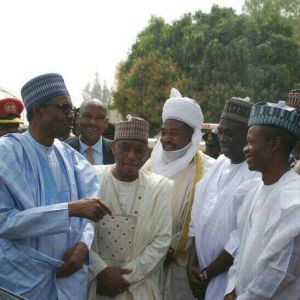
NOW HEAR THIS Nigerians all over the world. The Twin Problems

NOW HEAR THIS Nigerians all over the world. The Twin Problems ( 1. Religious Crisis and 2. Militancy ) would have come to a screeching halt ” if ” everybody in Leadership in Nigeria did half of what General Saleh Maina did to solve the problems from the root causes but leadership thrust their fingers into their ears and covered their eyes with their garments since 2009 till date, so so girramma turrenchi enodey pinis every day. ”

: ,
. . .
Long before Boko Haram became synonymous with insecurity in North-East Nigeria, Major General Saleh Maina had already encountered one of the region’s most serious religious uprisings.
Decades later, he would return to Maiduguri during the 2009 Boko Haram uprising—and shortly afterwards become one of the most controversial military commanders of the 2010 Jos crisis.
So, who exactly was Major General Saleh Maina?
.
️
Major General Saleh Maina was a career officer of the , rising through command, staff and military instructional appointments.
Before reaching two-star rank, he served in important professional and operational positions, including command of and appointments connected with military education at the Nigerian Defence Academy and Armed Forces Command and Staff College, Jaji.
He was promoted to the rank of .
⚔️ —
One of the earliest major internal-security operations associated with Maina’s career was the .
As a young Army officer, he was deployed during the military response to the uprising associated with Muhammadu Marwa, popularly known as Maitatsine.
Few could have imagined that more than two decades later, Maina would again find himself confronting a violent religious movement in the same city.
️
By the mid-2000s, Maina had risen to brigade command.
As , , , he was involved in the security situation surrounding the –- .
It was another chapter in a career increasingly defined by internal-security operations.

In July 2009, Boko Haram launched a violent uprising across parts of northern Nigeria, with .
At the time, Maina was the (), , .
His formation was involved in the military response to the uprising.
The confrontation marked one of the earliest major military engagements between the Nigerian state and Boko Haram.
Maina later recalled his experience in Maiduguri and compared the 2009 operation with his earlier experience during the Maitatsine crisis.
ᴛʜᴇʀᴇ ɪꜱ ᴀɴ ᴇxᴛʀᴀᴏʀᴅɪɴᴀʀʏ ʜɪꜱᴛᴏʀɪᴄᴀʟ ᴄᴏɴɴᴇᴄᴛɪᴏɴ ʜᴇʀᴇ:
.
—
But Maina’s most controversial assignment came in Plateau State.
As GOC 3 Armoured Division, he also became commander of the military task force responsible for maintaining security during the recurring – .
The crisis reached another devastating point in March 2010, including the massacre at .
The military came under intense public scrutiny.
⚠️
Maina’s command during the Jos crisis remains one of the most debated chapters of his career.
Some political and community figures accused the security forces under his command of failing to adequately protect affected communities. Some critics also accused Maina personally of religious bias.
.
He maintained that he and the Nigerian Army acted professionally and denied deliberately favouring any religious or ethnic group.
The controversy became serious enough to generate calls for investigations into the security response.
There were also disciplinary proceedings against individual members of the task force over alleged misconduct.
It is important, however, to distinguish between , , .
The available record does not establish that Major General Maina was personally found criminally responsible for the Dogo Nahawa killings.

There is another side of Maina’s career that is often overlooked.
He was not only a field commander.
He served in military instructional appointments and wrote about the role of the military in Nigeria’s internal conflicts.
His work, , examined the difficult relationship between the armed forces, conflict management and public perception.
In 2010, he also presented a paper on the subject at the University of Jos.
ᴛʜɪꜱ ᴘʀᴏᴠɪᴅᴇꜱ ᴀɴ ɪɴᴛᴇʀᴇꜱᴛɪɴɢ ᴄᴏɴᴛʀᴀꜱᴛ ᴛᴏ ᴛʜᴇ ᴄᴏɴᴛʀᴏᴠᴇʀꜱʏ ꜱᴜʀʀᴏᴜɴᴅɪɴɢ ʜɪꜱ ᴏᴡɴ ᴄᴏᴍᴍᴀɴᴅ:
‘ – .
️
Maina’s tenure as GOC 3 Armoured Division ended in , when Major General Sunday Idoko succeeded him.
He was subsequently redeployed to Army Headquarters, Abuja, before eventually leaving active military service.
After retirement, he remained associated with discussions surrounding security, conflict management and peace-building.
️ ‘
Major General Saleh Maina’s career is significant because it cuts across several generations of Nigeria’s internal-security history:
—
⬇️
–- —
⬇️
—
⬇️
—
From the streets of Maiduguri in the 1980s to the battle against Boko Haram and the complicated communal conflicts of Plateau State, Maina’s career offers a window into how the Nigerian Army’s internal-security responsibilities evolved over several decades.
ʙᴜᴛ ʜɪꜱ ꜱᴛᴏʀʏ ᴀʟꜱᴏ ʀᴀɪꜱᴇꜱ ᴅɪꜰꜰɪᴄᴜʟᴛ Qᴜᴇꜱᴛɪᴏɴꜱ ᴀʙᴏᴜᴛ ᴍɪʟɪᴛᴀʀʏ ɪɴᴛᴇʀᴠᴇɴᴛɪᴏɴ ɪɴ ᴄɪᴠɪʟɪᴀɴ ᴄᴏɴꜰʟɪᴄᴛꜱ:
, , ?
?
And perhaps most importantly:
?
These are questions worth discussing—not merely as politics, but as part of Nigeria’s military and national-security history.
, ‘ .
https://medium.com/@militaryworldhq/-1aa7f334b0a5
—
Military World HQ
Preserving Military History • Defence Education • Historical Archives • Armed Forces Documentation.
. ‘ , , , – . , .
#MilitaryWorldHQ #NigerianArmy #MilitaryHistory #Nigeria #DefenceHistory #Maitatsine #BokoHaram #JosCrisis #PlateauState #NigerianMilitary #NigerianMilitaryHistory
NOW HEAR THIS – July 16th 2009
Preacher of Peace Worldwide


LEADERSHIP BY TONY OYATEDOR


Join Mr. Tony Oyatedor Weekly on Adure Radio

DAVE’S SEAFOOD
